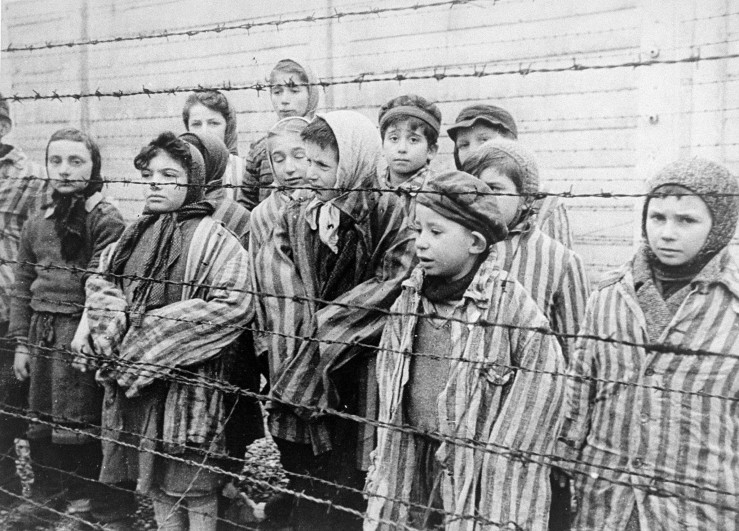
Auschwitz is known throughout the world as a symbol of the Holocaust – a place associated with the systematic genocide of the Jewish people by the Nazis during WWII and a place of unspeakable terror and suffering. Konzentrationslager (KL) Auschwitz, the former Nazi concentration and extermination camp, was established by the Germans in 1940 in the Polish city of Oświęcim, located just 60 km west of Kraków.
Today, more than 80 years later, Auschwitz is still a place of personal grief and mourning, where parents, grandparents and other family members were murdered. With so many people denying that the Holocaust took place, it is important to remember the facts. This is why we have included a brief description of the history of Auschwitz here.
KL Auschwitz was established by the Nazis in 1940 in the Polish city of Oświęcim – initially for the large numbers of Poles who had been arrested. In March 1942 it was expanded to include a vast new complex called Auschwitz-Birkenau. The purpose was to house up to 100,000 more prisoners and at the same time to function as a mass extermination camp – specifically for the Jews. This new complex was located in the village of Brzezinka approximately 3 km from Oświęcim. All the inhabitants of the village were forced from their homes, their houses destroyed, and the bricks used to build the new camp. The victims were murdered using Zyklon B gas. Initially there were two gas chambers – two converted brick cottages (the little red house and the little white house). The Nazis then increased the killing capacity of the camp by building four huge gas chambers and crematoria – all of which were in operation by June 1943. Most of the Jews were murdered after this date.
Auschwitz-Birkenau was a concentration camp as well as an extermination camp. The Jewish prisoners arrived in cattle cars and were immediately separated into two lines, men in one and women and children in the other. They were then forced through the infamous “Selection” process. Those considered fit for work were sent to the camp and the others were immediately gassed. The majority were gassed. The first selection point, called the Judenrampe, was located 700 metres outside the camp. In April 1944, in preparation for the arrival of 475,000 Jews from Hungary, the Nazis ordered the extension of the railway line into the camp, right up to the gas chambers in Crematoria II and III. In the summer of 1944, at the height of its operation, up to 6000 Jews were murdered per day. The last selection took place on 30 October 1944. Shortly afterwards Heinrich Himmler ordered the crematoria to be destroyed because of the advancing Red Army who liberated the camp on 27 January 1945. In total approximately 1.3 million people were murdered here – and of these more than 1 million were Jews.
For more information about the history – please visit the official website of the Auschwitz Museum.